Skip to content

Hummingbot Blog

Traders Are Creators, Too
cover

On September 15, 2026, TypeSafe released Jev, the first of what it calls System One models. Instead of writing text, Jev answers a question whose possible answers you fix in advance, and returns a typed decision with a probability for each option in 70 to 500 milliseconds, at $0.042 per million input tokens. That is the shape of algo trading: an agent is mostly a long series of small, structured decisions (is this pool safe, should this position stay open) repeated thousands of times a day. Within days of the release, a builder named Cedar saw it and started building.

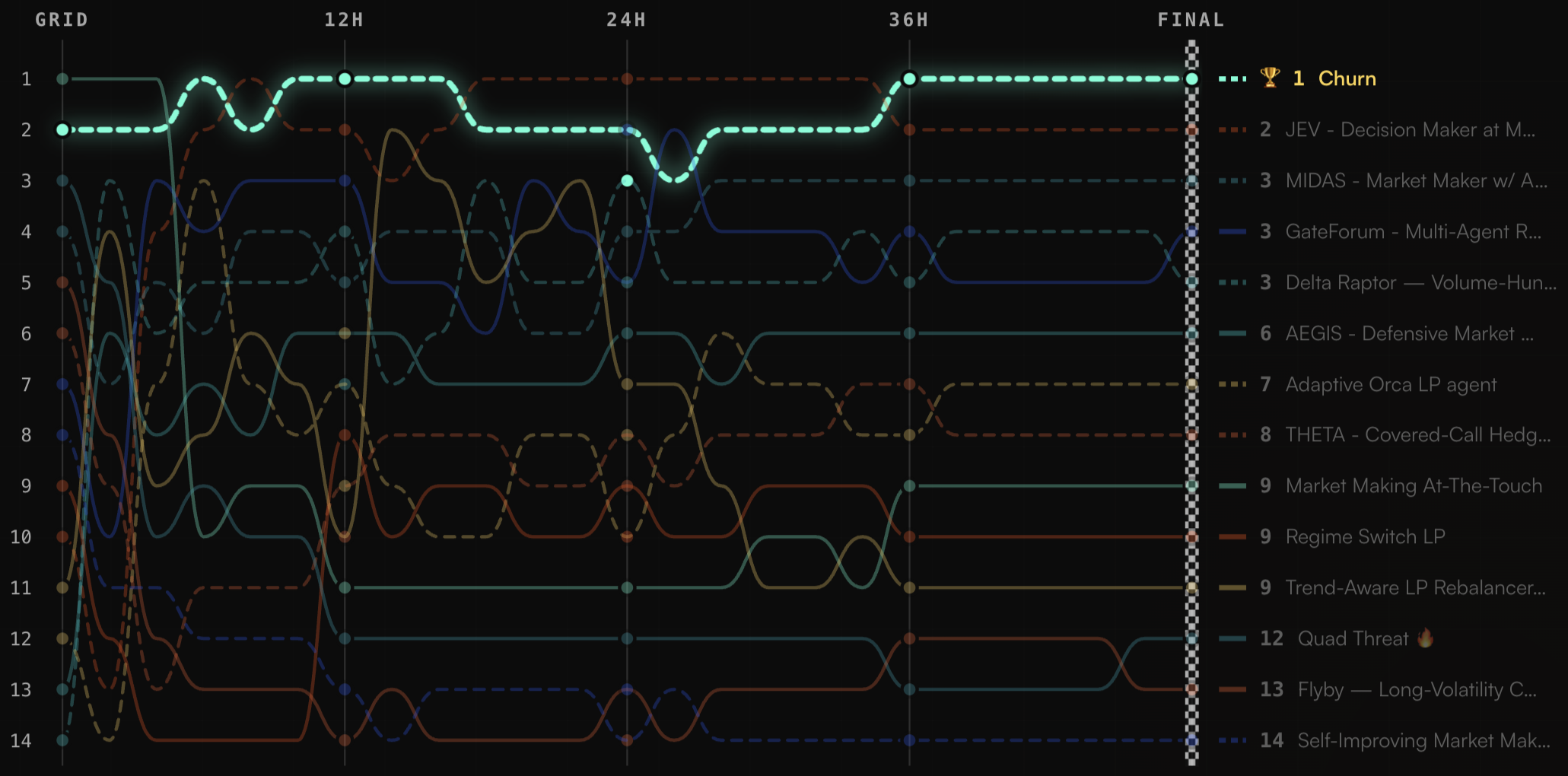
Cedar's agent, JEV, is a market maker for Meteora liquidity pools that uses Jev to decide which pools to hold. Every tick it scans Meteora's pool lists, runs a live eight-flag rug check on the strongest candidates, and lets the model rank what survives. Cedar entered it in the Agent Builders Cup, where it placed 2nd out of 14 in the 48-hour live race, with $1,028,542 in trading volume and a profit of $7.66 (+0.96%) on an $800 book. Here is Cedar walking through it:

A trader picked up a model days after it shipped, built a strategy around it, and finished second. That is the point of this post: traders are creators, too. The best ones are closer to artists than to button-pushers. They look at the same order books and pools as everyone else, see something nobody else sees, and build a machine to act on it. Hummingbot has worked for years because it never told anyone what to trade and made it cheap to try something new. The hackathon put that to the test: 158 builders registered, 52 agents were submitted, and 14 raced live with $800 of real capital each.
Securing Condor and Hummingbot API with Tailscale

cover

If you use Condor to trade from Telegram or the web dashboard, it talks to Hummingbot API on your computer or a cloud server. That API can place orders, read balances, and manage bots—so you should treat it like the front door to your trading stack.

This guide explains why exposing the API is risky, simple steps you can take today, and how to use Tailscale so only your own devices can reach the API—without opening port 8000 to the public internet.

Trading on GRVT with Hummingbot: A Complete Bot Development Guide

cover

Welcome to the GRVT connector guide for Hummingbot. GRVT is a hybrid derivatives exchange offering self-custodial perpetual futures with central limit order book (CLOB) matching. The grvt_perpetual connector lets you run automated strategies—market making, directional frameworks, and custom V2 controllers—against GRVT’s perpetual markets while managing orders through Hummingbot’s standard derivative connector interface.

Proposal: Simplifying Hummingbot Governance

By Michael Feng, co-founder of Hummingbot

The vesting period for all HBOT token holders has now ended, including all CoinAlpha investors, Foundation team members, and CoinAlpha team members. Fully vested, HBOT's circulating supply stands at 666,576,768 HBOT, with the Foundation holding the remaining 333.4M HBOT tokens in treasury. If you need to claim your tokens from the vesting contract, see How to use your HBOT TokenVesting contract.

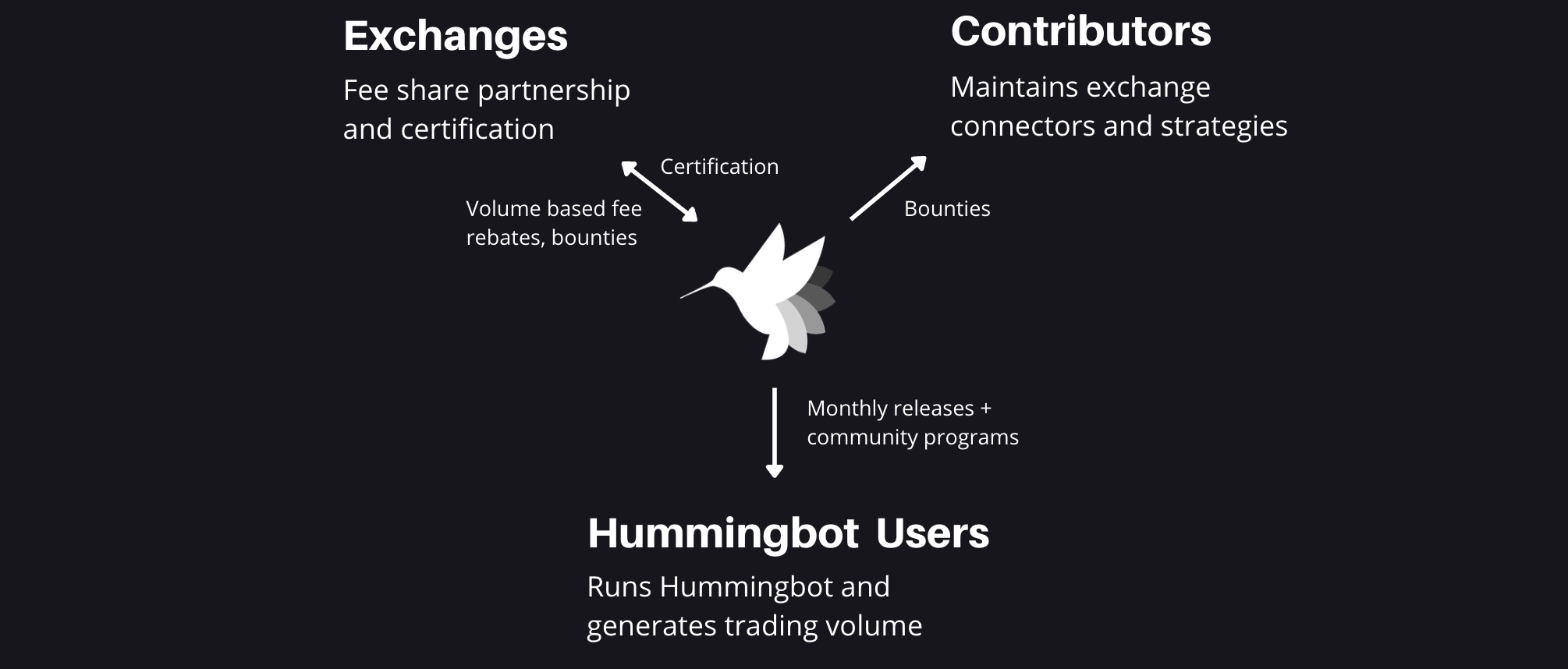
From the start, the Hummingbot Foundation's goal has been to create a sustainable open source project that earns revenues from exchanges and pays community maintainers to build and maintain connectors to their platforms, as outlined in the original Hummingbot Foundation whitepaper.

The Foundation's primary role is to coordinate the ongoing maintenance and improvement of the open source Hummingbot codebase via a decentralized set of actors: Exchanges, Contributors, and Users.

Strategy Guide: Grid Strike

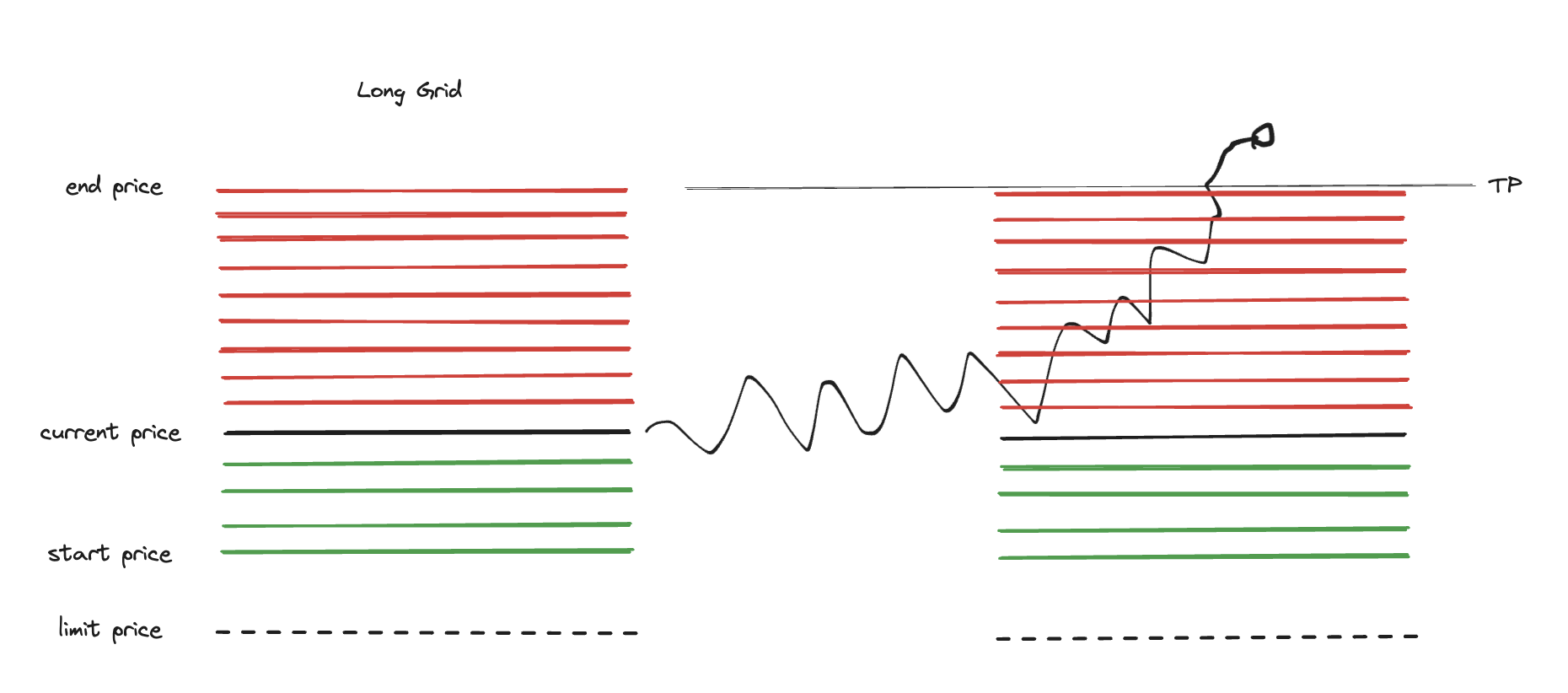
Grid Strike (grid_strike) is a Controller in Hummingbot's StrategyV2 framework that automatically places a grid of buy or sell orders within a set price range.

Unlike basic grid strategies, Grid Strike utilizes Executors which dynamically manage each order level with configurable take profit and stop loss settings. This means every position opened by the strategy is automatically monitored and closed according to your risk parameters. It can be configured to move with the market trend —- either up or down -- letting you adapt the strategy to changing market conditions.

This guide explains how the Grid Strike strategy works and helps you decide when to use it. You'll learn how to configure and run the strategyt, as well as the key concepts and how to set it up for trending markets.

Strategy Code: https://github.com/hummingbot/hummingbot/blob/master/controllers/generic/grid_strike.py

Strategy Overview

  • Grid-based Order Placement: The strategy lets you place either a Long Grid or a Short Grid that places buy/sell orders across a defined price range
  • Automated Risk Management: Each side utilizes Grid Executors that automatically manages the risk of each position with configurable take profit, stop loss, and time limits
  • Exchange Flexibility: Works on both spot and perpetual exchange connectors, including support for one-way position mode on perp exchanges
  • Highly Configurable Can be tailored for various market scenarios (trending up, trending down, or consolidating) or trading objectives (volume, liquidity, P&L, etc) by adjusting price range, order spacing, and other parameters

Dashboard Tutorial: PMM Simple V2

cover

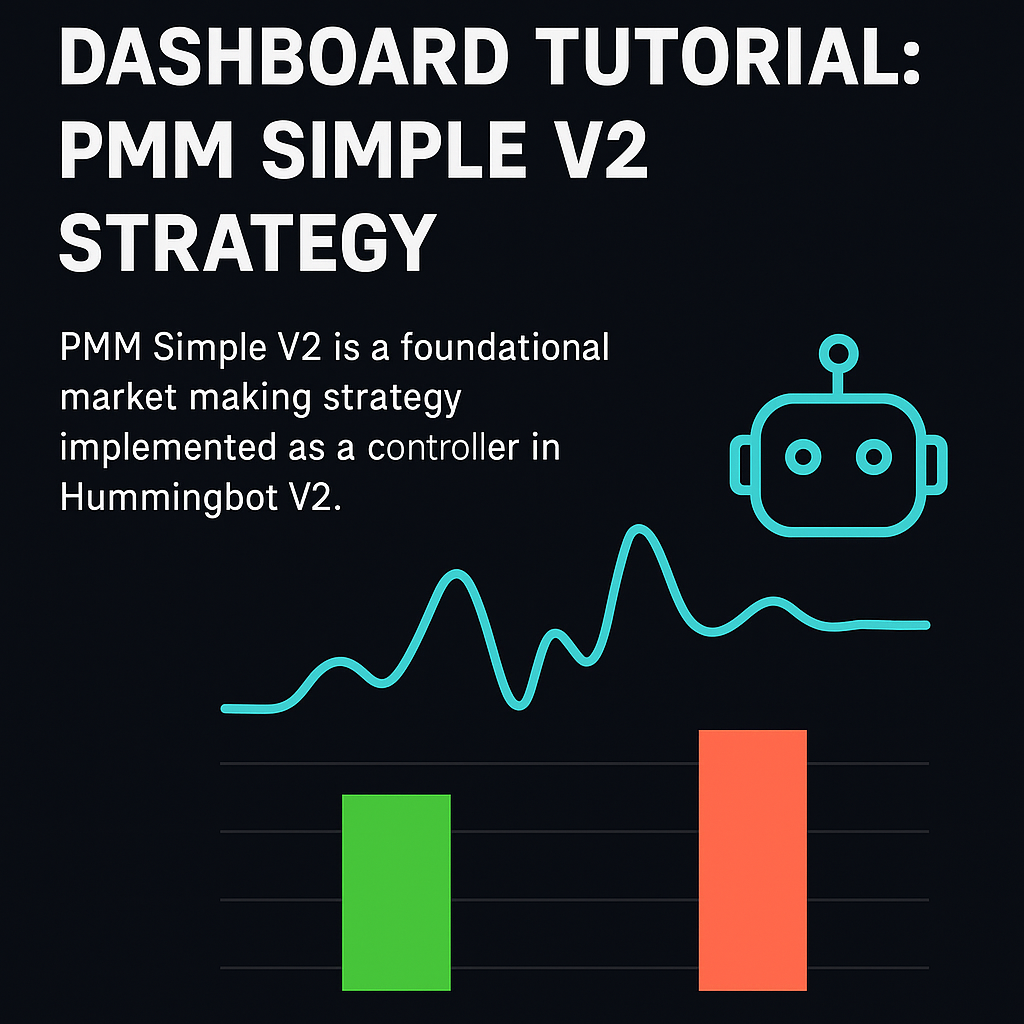
Welcome to the Dashboard Tutorial: PMM Simple V2 Strategy — a step-by-step guide designed to help you understand, configure, backtest, and deploy the PMM Simple V2 strategy using the Hummingbot Dashboard.

In this tutorial, you’ll learn how to set up the strategy’s parameters, test its performance through backtesting, fine-tune order spreads and risk controls, and finally save and deploy your configuration for live trading.

How to Configure a V2 Strategy Controller in Hummingbot

cover

What are Controllers?

In Hummingbot’s new Strategy V2 framework, Controllers are tools that manage your trading strategies. They gather market data (such as price information and trading volumes) and use it to make trading decisions automatically.

Controllers allow you to handle multiple trading strategies or trading pairs without needing separate bots. This helps simplify management and saves resources.

Using Binance with Hummingbot

cover

Introduction

Binance is the world’s largest crypto exchange by trading volume, with $76 billion daily trading volume on Binance exchange as of August 2022, and 90 million customers worldwide.

This section provides a step-by-step guide that helps you use Hummingbot with Binance, starting with generating exchange API keys and adding them to Hummingbot. All information is sourced from the exchange website and other content.